Grain Chemistry & Comal Craft

The Foundation Has a History

Ask an experienced taquero what separates a memorable taco from a mediocre one, and the answer rarely begins with the meat. It begins with the tortilla. When a freshly griddled tortilla has the right elasticity, blistered outer skin, and unmistakable toasted grain aroma, even a pinch of coarse salt or slices of avocado become a complete meal.

Understanding tortillas requires looking at two distinct agricultural lineages in Mexico: the millennia-old indigenous domestication of maize (Zea mays) through alkaline nixtamalization, and the 16th-century arrival of Old World wheat across the arid northern frontier.

01 / Alkaline Transformation

Nixtamalization: How Rock and Ash Unlocked Maize

Raw dried field corn ground into meal cannot form a flexible dough on its own; mixed with water, it crumbles like wet sand. Worse, reliance on untreated corn as a staple diet causes pellagra, a severe deficiency of vitamin B3 (niacin). Over 3,500 years ago, Mesoamerican cooks solved both problems through nixtamalización—derived from the Nahuatl words nextli (ashes) and tamalli (unformed corn dough).

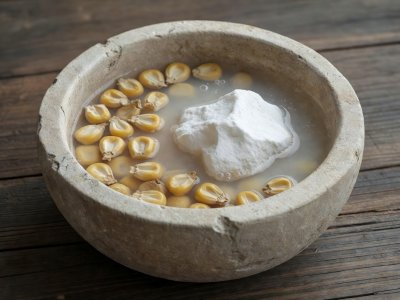
Soft-lit 3D render illustration of dried corn kernels soaking with white slaked lime rock Step 1: Alkaline Steep

Simmering in Cal or Wood Ash

Dried dent or flint maize kernels are simmered in water mixed with 1% to 2% slaked lime (calcium hydroxide, cal) or hardwood culinary ash, then left to steep overnight as the bath cools.
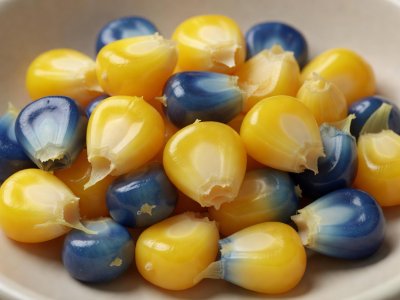
Soft-lit 3D render illustration of swollen yellow and blue nixtamal kernels after washing Step 2: Chemical Shift

Hemicellulose & Niacin Release

The high-pH bath dissolves the tough outer pericarp hull, partially gelatinizes starches, cross-links proteins with calcium ions, and frees bound niacin (vitamin B3) so the human digestive tract can absorb it.

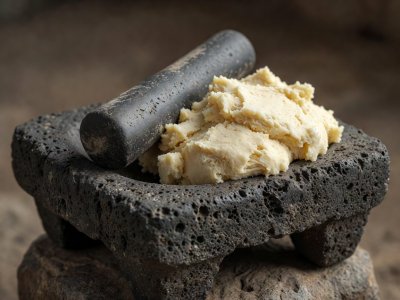
Soft-lit 3D render illustration of a basalt metate grinding stone and fresh masa dough Step 3: Wet Stone Milling

From Nejayote Wash to Masa

After draining the alkaline liquid (nejayote) and rubbing off excess skins, the hydrated nixtamal is ground between carved volcanic basalt stones (molino de piedras or hand metate) into plastic, cohesive masa.

3D studio renders shown as conceptual illustrations, not documentary evidence of regional practice.
02 / Landrace Diversity & Northern Wheat

Native Corn Races and the Rise of the Flour Tortilla

Mexico is home to roughly 60 documented native landrace varieties of maize (razas criollas), each adapted to specific altitudes, rainfall patterns, and culinary roles. Meanwhile, northern states cultivated a sophisticated wheat tortilla craft.

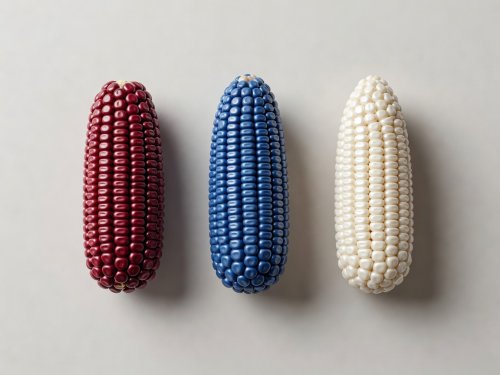
Soft-lit 3D render illustration of Bolita, Chalqueño, and Cónico landrace maize ears in red, blue, and white Mesoamerican Maize

Bolita, Chalqueño, Cónico & Pepitilla

Colors in native corn are not merely decorative. Blue and purple varieties contain anthocyanin pigments that turn vibrant turquoise-green when exposed to alkaline lime and lend a sweeter, earthier flavor with softer starch structure. Oaxaca’s rounded Bolita race makes supple tlayudas, while central highland Chalqueño and Cónico excel in steaming table tortillas.

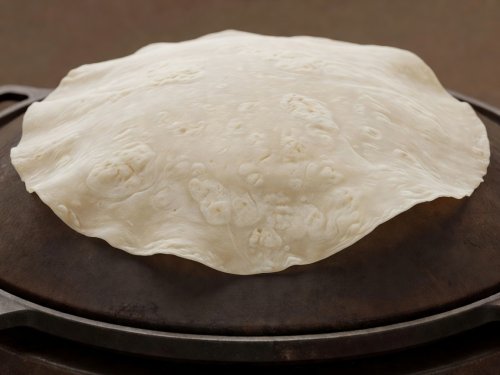
Soft-lit 3D render illustration of a large translucent Sonoran sobaquera flour tortilla over a domed iron griddle Northern Frontier Wheat

Tortillas de Harina & Sobaqueras

In Sonora, Chihuahua, Coahuila, and Nuevo León, arid river valleys proved ideal for winter wheat introduced during the colonial era. Traditional northern flour tortillas combine soft wheat flour, warm water, salt, and rendered pork lard or beef tallow (often without baking powder). The pinnacle of this craft is the Sonoran tortilla sobaquera (or de agua), hand-stretched across the baker's forearms to a translucent disc up to 60 centimeters wide.

03 / Architecture on the Comal

Anatomy of the Three-Flip Bake and Regional Dimensions

Pressing masa into a circle is only half the work. Proper gelatinization and skin formation on the comal rely on a precise three-turn sequence that creates two distinct sides on every tortilla: the thin, delicate cara (face) that blisters and lifts when the tortilla puffs (inflado), and the thicker, more resilient espalda (back). Taqueros always place the wet filling against the inner face side so the stronger back side forms the exterior fold.

Tortilla Type Typical Diameter Grain & Hydration Profile Primary Street Use
Tortilla Taquera (Copia) 9 – 12 cm Fine-ground white or yellow nixtamal; high pliability; steamed briefly in stacks Served in pairs for tacos al pastor, suadero, and cabeza
Tortilla de Mesa (Table) 14 – 16 cm Medium-ground nixtamal; fully puffed on clay or steel comal Tacos de guisado, carnitas, barbacoa, and sit-down meals
Tlayuda Oaxaqueña 30 – 40 cm White Bolita maize; baked until semi-dry and leathery-crisp on clay comal Spread with asiento, black bean paste, quesillo, and grilled meats
Tortilla de Harina Norteña 15 – 25 cm (up to 60 cm for sobaquera) Wheat flour, water, salt, and pork lard or vegetable shortening Carne asada, machaca, burritos, piratas, and gringas
Tortilla Raspada 13 – 15 cm Masa spread thinly and scraped with a spatula on a lime-coated comal in Jalisco Toasted crisp for Guadalajara-style tacos dorados and tostadas

Discover what goes inside these tortillas